JWST has observed a massive helium cloud streaming from the super-puff exoplanet WASP-107b, marking the first direct detection of atmospheric escape.
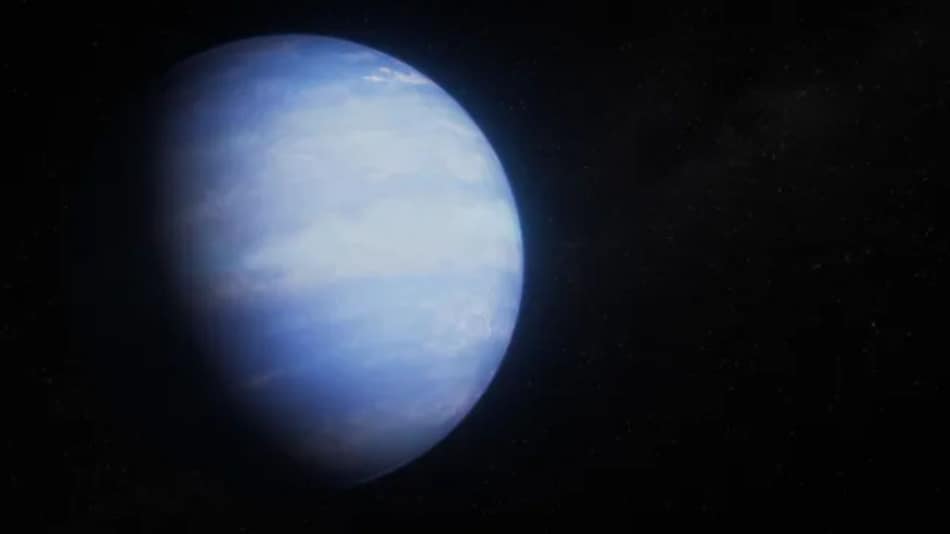
The JWST captured a massive helium cloud streaming from the super-puff exoplanet WASP-107b
Click Here to Add Gadgets360 As A Trusted Source

Astronomers have observed a giant helium cloud streaming outward from a distant “super-puff” exoplanet, marking the first time NASA’s James Webb Space Telescope has captured such atmospheric escape. WASP-107b, a low-density gas giant about 210 light-years away, appears to be losing its outer layers under intense stellar radiation. The escaping helium forms a vast exosphere nearly ten times the planet’s radius, trailing and even leading the planet in its orbit.
Helium Cloud Streams from WASP-107b
According to a recent paper, using JWST, a team led by McGill has found a massive helium cloud that is leaking from WASP-107b. The cloud of gas is an exosphere that extends to almost ten times the radius of the planet and is going ahead of the planet in its orbit.
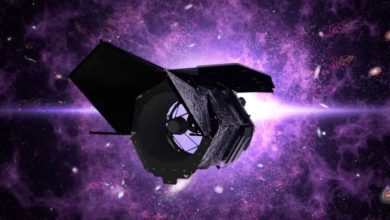
Webb’s NIRISS infrared spectrograph found the helium signature, which is a slight dimming of the star’s light that happened about 1.5 hours before the transit of WASP-107b. The researchers say that this is the very first time that the atmospheric escape of an exoplanet has been witnessed in the most direct way.
The Super-Puff Planet WASP-107b
WASP-107b is Jupiter-sized (94% of Jupiter’s diameter) but only about 12 percent as massive, giving it an extremely low density. This “super-puff” world orbits very close to its star — about seven times closer than Mercury is to the Sun — exposing it to intense heating.


Webb also detected water vapour high in the atmosphere (but no methane), supporting models that WASP-107b formed farther out and then migrated inward, where stellar heat is stripping away its gases.